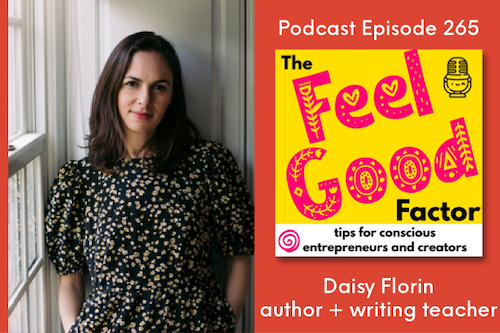
I invited Daisy Florin, author of My Last Innocent Year and Gateless Writing Instructor, for a chat on the podcast. We discussed the many ways writing regularly within a safe environment can help us, and how this practice overflows into our work, relationships, and way of thinking.
I love Daisy’s approachable and gentle energy and I’m so grateful she made the time to chat with me and share her experience with you all!
My podcast has mostly solo episodes (I rarely invite guests), but flowy, meaningful conversations like these are wonderful sometimes, don’t you think?
We raved about New Rules Studio, the incredible online community. We meet several times a week to write within a container that feels like a hug every time! Terri, the founder is opening up the program for a free preview from 27th to 31st July 2026. Sign up here and you can pop in to any of the sessions and experience the magic for yourself.
Listen to our conversation on any podcast app, or right here on this audio player 👇🏽
About Daisy Florin
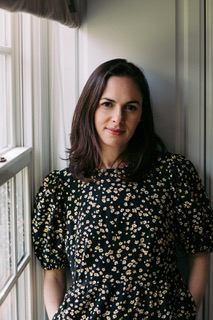
Daisy Alpert Florin is the author of My Last Innocent Year, which was a New York Times Book Review Editors’ Choice, a Washington Post Staff Pick and an Indie Next pick. A Gateless certified teacher since 2021, Daisy leads weekly online writing studios using the Gateless method. A native New Yorker, Florin lives in Connecticut with her family.
Connect with her – daisyflorin.com
Buy her book – My Last Innocent Year (to order it in India, click here)
Subscribe to her Substack – Girls With Feelings
New here? Find out more about The Feel Good Factor Podcast. If you think this episode can help someone, please share it with them. I’d also really appreciate a rating/review wherever you listen to podcasts. They help the show get discovered by more people like you.



 Podbean
 Podchaser
 Radio Public
 RSS
RSS Podcast Addict
 Amazon Music
 iHeartRadio
 Jio Saavn
 TuneIn
 YouTube
Unedited Transcript
Two weeks ago, I told you why we all need to read fiction, how it’s so important and how it influences us in in the way we live our lives, the way we create, and the way we run our businesses.
Then last week, I told you about why we need to start telling stories and how impactful stories are for people to remember you as well as your brand.
I didn’t actually plan it this way, but it’s worked out that today’s topic is writing.
It kind of connects to the whole reading fiction, telling stories, and now writing, not only as a skill that you use in your business, in your work, but also how important it is for us personally.
And as a rare guest for my podcast, I have Daisy Florin here.
Daisy is my teacher at New Rule studio. You get to listen to her thoughts, her experience with writing through different parts, different areas of hers. Life.
We talk about many more things, too, one of which is the geless writing method and new role studio , to which both of us belong.
She’s a teacher and one of the students.
We have amazing teachers on studio.
In the end of July, Terry Taspishio, the founder is opening up New Rural Stududi for one week.
It’s going to be free for an entire week, and anyone can drop into the sessions and experience them for yourselves.
So the link to sign up for that, I’ve put that in the show notes.
I’ve also shared a link to this podcast episodes webpage where you’ll find even more links and resources that we’ve discussed on this podcast episode, like Daisy’s website, a link to find out more about her book,, My Last Innocent here, a link to her substack and good stuff like that .
So you just have to click on that one link to the webpage and you’ll find everything related to this episode there.
If this is your first time here, you’re listening to the Feel Good Factor. I’m Susmitha Veganosaurus. I’m so glad you’re here today.
This is a podcast about mindfulness, joyfulness, and well-being, as you run your small conscious business or if you’re a multi-passionate creator or generally in your work life and creativity.
Now, let’s get on to my conversation with Daisy Flroin.
Hey, Daisy.
Hi, Susmitha. Great to talk to you.
Same here. I’m so happy you’re on the podcast.
Thank you for asking me.
For everyone who’s listening, Daisy is my teacher at New Rules Studio and I’ve spoken about studio so many times with all of you.
She also is the author of this lovely book called My Last Innocent Year. If If you’ve subscribed to my newsletter, you would have heard about it when I read it a couple of years ago.
The book was a New York Times book review editor’s choice, and a Washington Post staff pick and an Indian next pick.
Daisy, is a Gateless certified teacher since 2021. Gateless is the method that we all use at studio to do our writing. And Daisy leads a weekly online writing sessions for us.
Daisy, first of all, tell us a little bit about yourself, where do you live and, you know, about. Maybe your family.
Sure. Yeah, so I live in Connecticut, in the U.S., like, not far from New York City. I’m like, I can take a commuter train into New York City. So I say I live in Connecticut , but it’s kind of close, you know, close to New York. And I grew, I grew up in New York, but my family and I have lived here in Connecticut for almost 16 years, which is like the longest, honestly, I’ve ever lived in one house. This is the longest. And I have three kids , but one is, I know, graduated from college and he he lives, you know, on his own. And then my, my daughter is 20 and she’s in college, but she’s, you know, so I’m kind of in and out. And then my youngest is going to start his last year of high school now. So we’re almost like at this thing we call empty nest.
Empty nest.
But not quite, but we have also four pets, two cats and two dogs. Who we’ve maybe replaced, you know, our children. So we always have still have lots of responsibilities. But yeah, so that’s, and I am so happy to have Susmitha, who I think I heard you say you’ve been in studio since it started.
Yeah, I think Terri started it in December 2023. I mean, in October. October 2023 and December, I joined.
Yes, right. Exactly. Yeah. So, yeah, it’s been so great. It’s so great to have you and your voice there. And, I mean, the studio is so fun because we have people from , like all over the world and I want that.
Yeah. Yeah. It’s the community and the teachers that keep me coming. I mean, the writing is wonderful. The gateless method, of course, is pure magic, but, you know, the familiar faces and of course, teachers, and you, Daisy, you have such a gentle energy about you, the way you hold us. So a while ago, I think either you mentioned or I read somewhere that you used to be a teacher for second graders or something like that. Yeah?
Yeah, yeah. So I came to, my writing life is a more recent. , I mean, relatively recent. But yes, I, when I, you know, left college, I worked a little bit in writing adjacent fields. I worked for a newspaper and then I worked in book publishing in New York. But then I went back got a degree in early childhood and elementary education. So I actually taught, I taught like, it’s elementary school, like third and fourth grade. So like between like eight and 10 year olds. But then once I had my kids and I was sort of home with my kids , I also taught for four years, I taught three year olds. So that’s very different. Yeah. So that was, that was, I mean, I actually really enjoyed it. When I had very small kids, I would go to work and work with this small kids who weren’t my own kids. And I always, it made me feel very capable . Like I was very capable in the classroom, which I think spilled over into coming home and feeling more capable.
That is so interesting because you think it’s, yeah, the way around.
I know, because sometimes people would say, I don’t know how you can do this when you have these little kids, like how you can go to work and be with little kids. And it was just a very different experience. And I would sometimes laugh because sometimes the parents of the kids in my class would ask me for advice and I would give them advice and think, oh my gosh, if only they saw what it was like at home for me, you know, here I am giving them advice. But, but that I did for, for four years. And then I kind of, you know, I think the thing with teaching, I think it has to really be kind of a calling, like anything. You have to feel very passionate about what you do to do it really well. And I think I realised I wasn’t really passionate about it. So I wasn’t, you know , doing it that well. It didn’t give me that much joy and energy. So I was at the same time started taking at like a writing workshop in my community. I would go once a week to this writing workshop and I was very pass passionate about it, very dedicated. I would never miss it. I really bonded with the people in my group and they became a real community for me. So after my last year of teaching, I kind of said to myself and my family, I said, I want to try and commit to my writing full time. And that was probably 12 years ago or, 12 or 13 years ago. And very shortly after that, I found gateless. And that really changed my whole life. Yeah.
Yeah. You know, I remember again reading that when you joined Geless, you hadn’t set out to write a book as such, right? Like that wasn’t a plan . So what made you join Gess? Just just to write more, to understand it more?
Yeah, I mean, I was writing a lot of essays, so personal essays, kind of writing stories about, first, I was writing kind of about my kids and my experience with, you know, take care of my kids, sort of funny things my kids were doing. But I kind of quickly moved away from that because I just , you’re writing about your children is, is, it’s fraught, you know what I mean? And as my kids started to get a little older. I thought, you know, these stories aren’t always so cute anymore. And I don’t know if I want to expose them. And then I, I turned to my real subject, which was myself. So I started to just write more about myself and my childhood, my growing up and my parents and everything. And that’s when I came to gate list. I had a friend who had met Suzanne Kingsbury, who, you know, founded the Geless method. She had met her and said, you got to meet this woman. Suzanne, she’s changed my life, She’s got me writing again.” So I just, you know, very randomly reached out to Suzanne, and she said, “Oh, I’m having a retreat at the end of the summer, and do you want to come? And I just signed up, like on a whim, I didn’t really know what I was getting into. I didn’t know her. I didn’t know anyone. But that was, yeah, you know, that was, I met Terri, who runs New Rule Studio. I met for that weekend and Suzanne. And that weekend, I was still writing a lot of personal essays, and, you know, we would have writing prompts, and I was really digging into some of, you know, my own stories. But then about six months later, I went to another retreat . And I think I was kind of tired of writing my own stories. I kind of was a little sick of myself. And so at that that retreat, I thought, well, what if I write into these characters, like, kind of me and kind of, you know, these sort of adjacent to me. But what if I just try that? And that was like , I mean, electric. As soon as I started to do that that weekend, I thought, no, no, this is what I really want to do. And that started me on writing the novel that, that my last name recent year. So it took me five years to write it and almost three years for it out, but that really was the start. Yeah. And I had to never thought of writing , I wanted to write, but I never never thought I would write a novel because I didn’t think I could write fiction. I didn’t think I was, oh, so imaginative, you know, I just didn’t, I didn’t think I could do it, but, you know, I, the method that we use in studio, the Geless method, it just kind of frees you. I don’t, I’m sure you’ve, I, I imagine you feel the same way. It frees you to go places and take risks.
You know, as you were sharing that, that’s what I was thinking. You said the first retreat you were writing about yourself, then the second retreat, you started writing the fiction and discovered the path you wanted to take, like, the thing you wanted to do. You know, when you went on that first retreat and you were writing about yourself, that is it’s therapy. Like in it’s therapeutic because we need to dig into our own selves a lot. And then once that comes out, then other things become clearer. And that’s what I feel Studio does for me . Yeah. You know, you get these memories because of the proms when you’re in the theta state, you’re very feeling very meditative. You get these memories out of the blue that you hadn’t thought of. And by the time you finished writing, you kind of sorted it out, sorted out your feelings.. All in a matter of 15, 20 minutes.
It’s true. And you also have like mastery over it, right? It’s like you can take something that, I don’t know, was maybe painful or complicated or difficult or something you didn’t really understand. And you’ve kind of made it into something beautiful where you’re in charge of the telling, right? You know, So it’s it’s it is therapeutic. For me, it’s like understanding something that I I thought, oh, I don’t, now I think I understand what that really was. I’m sure you’ve had experiences where I can remember on the first retreat I went to , I started writing something. And this woman, she was the mother of a boyfriend I had in college. I mean, I never thought about her, you know? She kind of emerged in a piece I was writing, and, you know, she was this woman who was the mother of a boyfriend of mine. And a few years after that, that that I met her, she died . And I don’t know, she just, it all came together with this story and it was, I don’t know, it felt good to kind of reclaim her and put her in a story and I would never have thought of her if I hadn’t been in that, in that flow, in that the state . Yeah, so I’m, you know, it’s like things like that just can surprise you.
Yeah, totally. It’s it’s it is full of surprises. Let’s talk a little bit more about the power of writing for people who, I mean, okay, so, you know, as you said,, you always had an interest in writing. You’ve studied it, you’ve written essays, and you’ve done so much. And then it’s a natural path to what you’re doing now, right? The con connection. You’re not only writing, you’re teaching how to write also. You know, it all kind of flows into it. You would say, okay, all your life, you, you may or may not have used the word, but you’ve always identified as a writer, somebody who enjoys writing . And I feel like, you know, through my life, also I always felt like, okay, I am a writer because I loved no matter what kind of business or whatever I’ve done in my life, I’ve always written and writing is, it feels so, like you said, electric. You know, there’s something juicy about it. But I feel that, and I believe you’ll agree with this. Everybody can write and probably should write because of these benefits. As we discuss, you know, the therapeutic, the understanding of things . So what do you feel about that?
Yeah, I mean, I will say, because I want to make, yeah, I think that you would agree with me that coming to studio or coming to these sessions that we have to get to, you don’t have to be a writer, like a professional writer, and you have a book contract. And although there are people studio who I know are , you know, have a novel coming out or working on their second novel, you know, so there are those people. But I, I always want, I don’t want anyone ever to feel intimidated to come and join us because even if, yeah, even if you are, you know, you have a small business and you need to write, you know, an email or, you know, somebody for your substack or, you know, anything, we’re always writing in anything we do , even if you just want to, you know, work through or works out, it’s open for everyone. And I’ll say that it took me a long time to sort of see myself as a writer, even though now when I look back on, I’m like, oh, my gosh, it was always there. But I think, like, for example, my oldest son is, is a mathematician. Like, he was always, like, a very, very good math student, you know, like a couple of grades ahead, and he would, you know, so he had a lot of , there was a lot of like, oh, Sam is a really good math student. And he’s taking like this class at this age. And he would go to math competitions where he would like win a prize in math. And so he had a lot of affirmation around that. And we don’t really have that for writing. I mean, we kind of do, or at least I never felt it. Like, I was told growing up, sometimes a teacher would say, wow, you’re a really good writer or you’re in the, you know, the higher reading group or whatever it was. But it wasn’t like, I kind of grew up feeling like, oh, yeah, well, so what? Like everyone can write. It’s something everyone can do. It’s not like I played a cello or something. You know, it’s like something that everybody does and I didn’t really know that I like maybe was was good at it. Even though over the years, I can think of people who told me that, but I’m not sure I ever really believed them. So I didn’t study writing in school. I was studied, I was a history major, so I did a lot of writing, but I didn’t like, I wasn’t an English student. I didn’t take, I never took creative writing classes. I don’t know why. But then, again, I grew up in a family where we were always reading, always writing. You know, we kind of talked about writers and my father like loves writers and writers were like celebrity in our household. And my brother is a journalist. And, you know, so it’s like , it was always there, but I, it’s like when you’re swimming in the water, you, you can’t always see that it’s water, you know? Yes, yes. So I, you know, I came to, to Geless, like wanting to write more, but without, I didn’t really have like a pedigree. I wasn’t professional. I wasn’t being paid for my writing. It was just something I really want that I was maybe had a natural talent for, but I didn’t really know it. And so just getting involved in that community kind of like made so many things make sense . That is like the biggest gift, whether I published a book or not, like just like, oh, okay, this makes sense. This is where I’m sort of meant to be. These are my people and all the things I’m bad at. Like, I don’t need to think about them so much because I want to do this instead, you know.
The two things you’re good at, like the writing as well as the teaching.
I mean, you know, I love, I don’t know that I was actually a very good teacher in my back in the day.
Oh, you know, Daisy, Wait, wait, wait, wait. So the whole reason I brought up the thing where you were teaching elementary school is because, you know, when I read that or heard that, I was like, ah, that makes sense because you actually embody that kind of energy where you hold us all very, you know, gently, like we are children, but also firmly so that we, we all stick to the rules. And, I mean, you know, even the newer people and stuff like that. So you know, you have the, you embody that whole thing. And just with that energy, I can imagine you would have been a great teacher .
Well, thank you, thank you. I think, you know, one of the things I love to talk to writers, you know, all the time. Like I talk to writers, I say, you know, let’s get on the phone and like, we’ll figure out a problem. Or just giving them a pep talk or like letting them know it’s okay. And I just, I love to do that. And I think one of the things about theeless method, and I don’t know if you’ve, you know, I’m sure you’ve talked about it or we could talk about it here a little bit, but the container , the way that we, I like to do our sessions, I like to do them the same way every time, like just to have, so that you, as, you know, coming to the studio, you know what you’re going to get. You know what the structure is going to be every time because I feel like that’s what I would want. And then just the container of knowing that this is how we talk about the work. Sometimes, you know, pieces come up and they’re difficult and they’re, you know , challenging or, you know, the subject matter is hard. And, but we, we treat it always like fiction to give some distance for the writer. And we feedback in this very specific specific way where we focus only on the page, what’s on the page, what we hear, and what we love . So the container is so, so solid and so strong. And there are so many people who’ve been coming like you have been coming for a long time. But even people who come in are like new, I feel like they pick up on it right away. Like it’s very rare that like there’s something that is like, oh no, you know, I can’t believe someone said that like, almost never. You know? Never, never. No, no, no. Yeah. When it comes to the , you know, I’m a very woo woo a person too. And I believe this whole gateless container, this whole method that we use, there is some energy about it, which at attracts the right kind of people to whom this is suitable. And then you come into class and you become that way too.
Time and time again, there is like this little taste of that magicic when we see when a bunch of people write in class, you know, not everybody reads every time, but three, four people who read, there will be a line through all of it. There’s something connecting it. And what is it that made the teacher call out those specific for people that day, right? So there is an intuition there.
It’s amazing, because every time we hear, right, you’re right, we can only hear, you know, three, four, maybe five, depending on how, how, you know, how it goes. But I’m always like, how did I pick these five people? And also, I could have picked five d different people and it like, I would have wanted to hear every one of those stories. You know, sometimes I’m like, I can’t believe I almost didn’t hear this story today. But then I know there are other stories out there that I didn’t get to hear. And, you know, that is part of the way that studio, you know, operates is that we meet for an hour, we write for 20 minutes, so we can’t hear everyone. You know, sometimes we have 40 people on the call . We always spread the wealth and try to move so that people get to read every few weeks or, you know, once a month or something. But it’s also to make you, you know, as the writer, not dependent on the feedback, right. It’s like, because most of the time, you know, if you’re writing, you, we get off the phone and you write something today, you don’t have the feedback. So you have to kind of beeless with yourself. Like, that was a great sentence or I really love the way I did, you know, just learning to beeless with yourself. Yeah. Um, is really, is really the trick.
It’s definitely a wonderful practice. And when we are new to a studio, we don’t understand the equal wayage we we need to give to listening as much as as reading out. Because every time when we listen in class, oh my God, you know, there’s so much we learn. There’s so much we feel. Yeah. And I love that we don’t do this formal introduction of people in class and all that, you know, the boring stuff . We all know each other and we, you know, you kind of say, I keep saying studio friends, right? I, you know each other through the work that you do through your writing, which is such a deep way to get to know someone, even though we’re assuming it’s fiction, it’s just about the way they write the things they observe. Each person is different that way. And then in the comments while somebody is reading , again, you connect because you’re saying who’s, you know, who’s kind of mirroring the same things you are saying. So you’re like, yes, yes, this person, you know, this is standing out to this person as well as me. You feel more con connected connected that way too. It’s such a wonderful way to connect with people.
I agree. I agree. Yeah, really just like, and even when we go on retreat where, you know, you might be in the room with people when I go on retreat with Suzanne, and we never introduce ourselves like, hi, I’m Daisy. I have, you know, that kind of introduction. We just meet right in the writing. And then, you know, you may chat, you know, you chat at lunch or you chat and everything. But it’s, you’re absolutely right. There’s like an energy in the room. And, you know, just really when you listen to someone, you know, you write something, right? You’re sitting in studio, you write for 20 minutes and maybe you think like, oh, God, I don’t know. That wasn’t my best or I didn’t really like, really get into it. And then you hear someone else read and you’re like, that was incredible. Oh my God, like how did they just write that in 20 minutes? And even if you don’t get to read that day, you have to know that if someone heard your piece, they would love it as much. It’s like, because it’s your , your voice, your vision, the way, exactly what you were saying, the way you observe the world. It’s so unique to you. So you have to know, like, I read somewhere and I don’t know if I’m going to get this quote right. It was like the thing that we don’t , we look when we do our, when we write and we look at our own writing and we think, oh, God, I really don’t like that or I don’t like that. It’s usually the thing that’s most us, you know, it’s like, we, the thing that makes our work ours is the thing that we are sometimes most critical of, you know, but when someone else hears it, they’re like, oh my God, your dialogue is incredible. Or like, you’re like, what? You know, so, , and when you focus on what’s working, you want to go back to the page. It gets you excited to do it again. And if you are writing, you know, anything I write in a studio or on retreat, if then I try, you know, I’m put it into my novel, it always gets, you do edit it and you sort of figure it out and you try to clarify . So there is like a process that goes, you know, into like creating, you know, making it work. And, and of course, you know, sometimes people will say like, well, if people only tell you what’s good and what’s working, like, how do you ever get better at the things that you’re not good at? It’s like, well, don’t worry about that rightly now. If you only worry about what you’re not doing well, you know, you’re more reluctant to even go to the page, right? It just feel, it’ll just feel like, like heavy and bad. And you’ll just be like, me, I’ll go do something else. But if you think about what you’re doing well, it energises you. And you want to go back to the page and you’ll figure out all the rest. Okay, I’m not as good as dialogue. All right, I’ll figure that out. You know, I can figure that out later. Yeah.
Yes. You know, there are so many greatess principles. You know, it overflows into the rest of your life too. So whether it’s in your business or, you know, your creative project or relationshipips, even, all the little geless container rules, like, you know, don’t make this about yourself or notice what is good, what is working, and not wanting, not needing validation, getting over your inner critic and focussing on your strength, these are things that kind of overflow into the rest of your life. So I feel like even though it’s a writing studio and it’s, it’s, to practice writing for the sake of writing more than anything else, it’s going to impact the rest of your life if you think about, if you keep these rules in your mind. And you don’t even have to keep it in your mind because, you know, several times a week we get together online and studio and do this. So then it becomes a part of who you are. And you start watching yourself in other conversations, too, when you’re regularly talking to people and you’re like, okay, let me not make this about myself and how to distance yourself from the work. So I’m different. My work is different. So I don’t have to take it too hard depending, you know, no matter what someone says about my work, you know, that kind of stuff. So that’s, again, you know, beautiful .
Yes, I love what you just said. It’s right. It’s like everything. Suzanne sometimes will say, like, oh, people get divorced after coming geless or they quit their jobs. I mean, not that we want these things to happen, but it’s like, it does make you reflect on all the relationships in your life. You’re like, wait, yeah, like, is this really serving me because you do see yourself and your work in a different way . And even just the thing we, the thing we say when you begin to read your piece, if you’re, you know, if you’re chosen to read that day, you don’t disclaim it. You don’t say, oh, God, this isn’t really good. Or like, I didn’t, I sort of had a headache or my dog started barking. It’s like, no, you just read what’s on the page . And that is the one thing I notice that I try not to do myself and I notice it in other people so much. It’s like people being like, oh, well, you know, I’m, I’m just a mom and, you know, I don’t really, you know, just disclaiming their whole identities. You’re like, wait a minute. Why are you doing that? Yeah. So, um, yeah. And anyone, like I have two of my, my one kid is a math person, um, but my other two kids are more creative. I mean, my, my math person is creative also, but my other two kids are like, my daughter’s a visual artist and my son is like, is a writer. And I just really, I can see it in them, right? Like this, like, oh, it’s not good enough or I don’t like it. And I just try to be reallyeless with them. It’s like every artist has always felt this way since the dawn of time and you just have to, you know, find a way to rise above it if you want to do this work and geless is really helps you.
Absolutely. And, you know, you, I bring that into cooking too. I’m a chef. And I’m like, okay, I’m not going to disclaim. I’m going to serve and see what is, you know, not say, oh, it’s a little spicy today or, oh, it’s a little salty. No, don’t say anything.
Oh, my God. My mom, my mom used to say that her mom would put the food down on the table and immediately say, it’s not not very good or I cooked or whatever. And my mom, who wasn’t a, you know, didn’t know about gate list, when she would say like, God, mom, why are you doing that? Like, we haven’t even tried it yet. It’s It’s a perfect metaphor. If someone has cooked something for you and tells you it’s dry or they oversalted it, you’re not going to enjoy the meal as.
Yeah, it will taste, dry. You will look for the the saltiness. That is what’s going to happen. You’ directing them.
And that’s what you do when you say, you know, oh, my job isn’t that important or I’m not that good at this or whatever it is, you know, it’s Yeah. It’s a metaphor.
So, Daisy, tell us a little bit about your book. Oh, my last in a year. Mm. Yes. So that was my debut. It came out in 2023, right before I turned 50. So it’s like a long, you know, a long journey to there . But it’s a it’s a novel set in 1998 on an American college campus sort of modelled on the college I went to, which is called Dartmouth in New Hampshire, a small college in New Hampshire, very rural. And it’s about a young woman in her final semester trying to figure out what she’s going to do when she leaves. And she falls into a love affair with her writing professor. And it’s set in 1998 against the backdrop of the Monica Lewinsky, Bill Clinton scandal, so that’s kind of the overhang. And it’s about, you know, she wants to be a writer and he’s, there is some, there are geless themes in it, I’ll say, she’s going to a lot of writing workshops that are not very geless. And then she has this writing professor who really spots her talent, but it’s unclearar if he really thinks that or if he’s just trying to seduce her. So it’s told from this perspective, we know when the main character is named Isabel, and we know when she’s telling the story that she’s telling it from a point in the future. And so I think I use that voice to really , I was writing the novel when I was in my 40s and I was really looking back on not just the late 90s, sort of as a cultural moment in the United States, but also just on, you know, what it means to be in a young woman in your 20s looking, you know, when you look back on that time . And when you have, you know, sort of a bad mentor, a mentor who who makes you feel a little wobbly about his affirmation and is it really true or is there something else at play? So those are some of the themes, but yeah, that’s It’s
it’s so beautifully written, Daisy, Of course, I’m not surprised. But, you know, you can feel it. Like, you’ve gone into , um, I remember this one scene where Isabel’s in a room and she can hear the, you know, the beats of somebody else’s playing the music and she can feel it in her. You know, you know, these are things that we can relate to. I feel like the way you’ve written the book, of course, you know, if you, you know, were in your 20s in the 90s and of course, going to college, then there’s so much to relate to. But even somebody who hasn’t gone through that experience , still, there is so much to relate to in this book, which is so beautiful. I feel like a lot of young women should read it. I mean, everyone should read it, but especially young women, because to be able to notice the things that Isabel goes through, because it’s not just in the 90s. It’s like, it still happens. Yeah. So you’re not talking able to understand it.
Thank you for saying that. I’m actually so lucky that I have a lot of young women who have written to me, who’ve read the book and I’m just like, delighted. And my daughter is, she’s 20 and she has, you know, she, she didn’t read the book when it first came out. She was like, 2023. I don’t know. She was like 17. She wasn’t quite ready for it, I think. But she just read it in the last year. And now her friends are reading it and like in there and was like, oh my God. And I just, I love that so much. It was
That is so cool, love that she’s I love it. And it’s it’s so cool she’s able to say, my mom wrote this. Yeah. And that’s incredible. I read it and they’re like, oh, I love this part. Like they relate to it, you know, so you’re right. There is some something, something timeless about that time in our lives.
True. So true. And I did hear it’s it may be turned into a TV series. Is there a? Well, you know, it was it was optioned to become a TV series. That has not, that is not happening right now, but, you know, you never know these things . I don’t understand that side of the business at all. And I try to stay, keep my head out of it because it can be kind of a distraction from what I’m, you know, so much of it is out of my control. So we’ll see what happens. I would be, of course, delighted , but it feels very different from what I’m, you know, from what my focus and my, where my strengths lie. So right now I’m just kind of working on, trying to work on my next book and trying to be really focus on that. Yeah. Yeah. Which I can’t really talk about right now. My brain is unable to do that. Not for like, not because I can’t, but I’m sort of not really able to, I think, in a way that.
No problem. It has to take take a little bit of a more solid form before you can talk about it, right? Totally understandable.. Oh, gosh, okay. Wow, Daisy. It was so good chatting with you. I’m so good glad you were here on the podcast. Everybody go to Daisyflorin.com to find out more about Daisy’s work , her book, My Last Innocent Lear, Get It and Read It. And also, she has this really good substack called Girls with Feelings. You’ve got to subscribe to that one too. Thank you so much, Susmitha. So wonderful to talk to you, and I’m so glad you’re in the studio with us.
Thanks, Daisy. Bye.
Bye.
Thank you so much for listening to this episode of the Feel Good Factor. As I said, check out the link in the show notes to sign up to Neuru Studios free week to try out the sessions for yourself, as well as the other link to go and find out more about Daisy and all the wonderful work that she does. All right, talk to you again next week. Take care. Bye.
Susmitha Veganosaurus
“I read voraciously, find humour in most things, and I’m most in my element when I’m teaching, writing, and playing with clay. I believe authenticity and kindness are the keys to world peace. Sign up for myfree newsletterwhere I share conversational emails with stories about Life and Business Tips, Vegan Hacks, Holistic Guidance, and more.“